

One video or a content campaign: how to decide
Learn when one hero video is enough and when a content campaign pays off, with a content matrix, real scenarios and mistakes to avoid before filming.
- 01
Decide between one video and a campaign from the audience journey, not from the number of assets you would like to have.
- 02
A single hero film is the better investment when there is one central moment, one audience and one main place to watch it.
- 03
A campaign needs a content matrix before filming, so each asset has an audience, channel, format, owner and date.
- 04
Short and vertical cut-downs only look intentional when they are planned and captured for their format.
- 05
Every extra asset adds review and publishing work, so produce only what has a real function.
Quick answer
Choose one video when there is a single central moment and one place where people will watch it, such as a launch, a corporate presentation or a service page. Choose a content campaign when your audience needs to meet the message several times, across different channels or stages of a decision. In both cases, decide before filming: a single film deserves all the resources, and a campaign needs a content matrix so one production generates assets that each have a clear job.
Start from the audience journey, not the number of videos
An organisation may need one strong film to introduce an idea or several assets that sustain a conversation over time. The decision should come from how people meet the brand and how long the content needs to stay useful, not from a wish to "have more content".
Map the moments where your audience comes into contact with you. Someone may discover a project in a short clip on a social feed, look for proof in a case study on your website and decide after watching a complete explanation, or after a meeting where the film is shown. If several of those moments need video, you are looking at a system. If there is one central occasion, a single strong piece is usually the better investment.
Three questions help at this stage:
- How many decisions does the content need to support? One decision, such as registering for an event, often needs one piece. A longer purchase or hiring process often needs several.
- Where will people watch? A website film and a vertical clip in a feed are watched in very different conditions.
- How long should it stay relevant? A launch film may have a short peak. Content that explains a service may stay useful for years.
When one hero film is enough
A single film works well around a central moment: a launch, an event, an institutional presentation, a service page or a story that needs a complete narrative. Production resources stay focused on one piece, which allows more time for script, locations, interviews, colour and sound.
Signs that one video is the right call:
- There is one clear message and one main audience.
- The film will live mostly in one place, such as the homepage or a sales presentation.
- The budget is limited, and spreading it across many assets would lower the quality of all of them.
- The organisation does not yet have the capacity to publish and manage a calendar of content.
If this describes your situation, protect the quality of that single piece. A good company film can still be supported with a couple of short cut-downs, but the film comes first.
When a campaign makes sense
A campaign is useful when the message must appear across several stages, channels or audiences. The hero film can introduce the idea, while short cuts, interviews, behind-the-scenes material, photography and vertical versions answer specific needs.
Advertising platforms are built around this logic. Google Ads, for example, offers video ad sequencing, which lets advertisers tell a product or brand story by showing people a series of videos in a defined order. Its templates include introducing a brand with a long video and then reinforcing the message with a short one. You do not need paid media to apply the idea: the principle is that different pieces do different jobs in sequence.
Signs that a campaign is the right call:
- The audience needs several points of contact before acting.
- You publish on several channels with different formats.
- There are distinct audiences, such as clients, partners and future employees, who need different angles.
- The content must sustain attention over weeks or months, not on a single day.
A campaign does not mean filming without limits. It means defining, before production, what question each asset answers, where it will appear and how long it should remain relevant. If the need is ongoing rather than tied to one moment, recurring content may be a better model than a one-off campaign.
The middle option: a hero film with planned cut-downs
Many projects sit between the two. One main film is produced, and during pre-production the team plans three to five derived pieces: a 30-second version, a vertical clip, a quote from an interview, a set of photographs. This keeps the quality focus of a single film while giving social channels and sales teams material made for them.
The key word is planned. Cut-downs built after the fact, from footage filmed only for 16:9, tend to look like leftovers. The platforms themselves treat vertical video as its own format: YouTube, for example, explains that a video up to three minutes long with a square or vertical aspect ratio is uploaded as a Short, and Meta recommends 9:16 for Instagram Reels ads. Our guide to horizontal, vertical and social video formats explains how to capture for each.
Two scenarios side by side
Abstract rules are easier to apply with examples. These two hypothetical situations show how the decision changes.
Scenario A: a professional services firm updating its website
A consultancy wants a film for its homepage that explains who it is, how it works and what makes its team different. The audience is prospective clients who already found the website. They are watching on a laptop, often with sound, and they want depth. There is one place, one audience and one message.
Here, one well-made film of two or three minutes is the right answer. The budget goes into a strong script, good interviews and careful sound. A 30-second version for LinkedIn and a handful of stills are a sensible addition, planned in advance, but nobody needs a twelve-piece campaign.
Scenario B: a manufacturer launching a new product line
A company is presenting a new range at a trade fair, then wants to keep talking about it for three months. It needs to reach distributors, end clients and its own sales team. People will meet the product in feeds, at the stand, in sales meetings and on the website.
Here, a campaign makes sense. The hero film presents the range. Short vertical clips show each product in use. Interviews with engineers answer technical questions. Event footage from the fair becomes proof that the launch happened and drew interest. A calendar spreads publication over the quarter. All of it can come from two or three well-planned filming days instead of separate shoots.
The difference is not the size of the company. It is the number of moments, audiences and channels the content must serve.
Build a content matrix before filming
Whether you choose one film or a campaign, write the decision down. A content matrix turns a vague wish into a production plan.
| Need | Main piece | Content system |
|---|---|---|
| Launch an idea | Presentation film | Teasers, main film and topic responses |
| Explain a service | Website video | Questions, demonstrations and focused cuts |
| Cover an event | Recap film | Announcements, interviews and moments |
| Build trust | Main testimonial | Several cases, process and behind-the-scenes proof |
What each line of the matrix should record
For each piece, record audience, message, channel, format, intended length, owner and publication date. Then identify shared material. One interview can feed the main film and topic cuts. Operational footage can support the website and social channels. Photography captured on the same day can cover editorial needs without another production.
If a line has no channel or no date, question whether that piece needs to exist.
Capture once, plan several uses
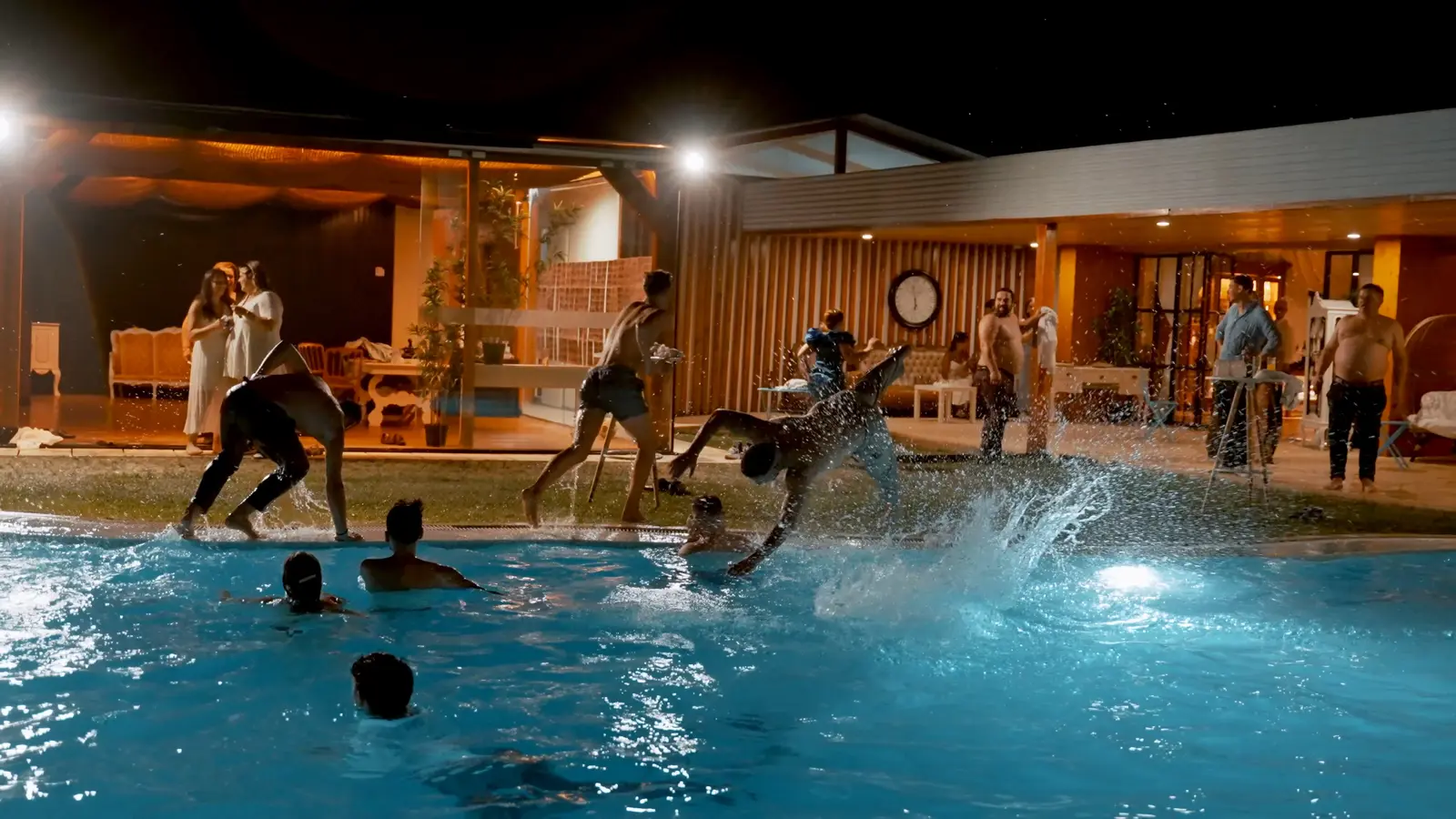
With preparation, one filming period can create varied material without becoming chaotic. Take a product launch. The day may include a central interview, a demonstration, detail shots, the team at work, portraits and short answers to frequent questions. The order is planned to protect light, people's availability and continuity. Some actions are repeated in a vertical frame. Questions are grouped by theme so they can be edited into stand-alone pieces.
Planning does not turn filming into a factory. It sets priorities, so the crew knows where to observe, when to repeat an action and which material protects the wider campaign. At live events, where action cannot be repeated, this matters even more: the plan decides in advance which moments need a second angle.
Consistency without repetition
A campaign should not publish the same edit at different lengths and call it variety. Assets may share direction, tone and message, but each should have a clear function.
- One central idea and shared vocabulary.
- Recognisable visual direction without repeating every shot.
- Clear rules for graphics, captions and sign-offs.
- Lengths adjusted to each channel's role.
- A publication calendar consistent with production and approval capacity.
- An organised archive for future reuse.
The hidden costs of more assets
Every extra asset carries work beyond the edit: scripting, review rounds, captions, translations, exports, uploading, community management. Ten pieces may need ten approval cycles. Before committing to a campaign, check who will review, who will publish and how often. Our article on how much professional video production costs explains how deliverables affect the budget.
Mistakes to avoid
- Deciding the number of videos before the objective. Start with the decision you want to support.
- Promising cut-downs without planning them. Vertical and short versions need their own shots.
- Treating every asset as equally important. Rank them so the essential pieces get the best material.
- Forgetting the life after launch. Content that explains a service or shows proof can keep working long after the campaign ends.
How DropMedia helps you decide
Our process starts with a briefing, then pre-production, capture, post-production and delivery in the formats each channel needs: a 16:9 main film, 1:1 feed versions, 9:16 reels and stories, subtitles and cut-downs. The choice between one video and a campaign happens in the first two stages, before any quote is final. A clear audiovisual brief makes that conversation faster.
When a project calls for a system, our audiovisual campaigns service builds the matrix with you and plans the filming around it. When one strong film is enough, we say so.
References
- Google Ads Help: About video ad sequencing
- YouTube Help: Upload YouTube Shorts
- Meta Ads Guide: Video ads in Instagram Reels
Frequently asked questions
Does a video campaign require many filming days?
Not necessarily. A well-structured filming plan can generate several assets in one or two days, as long as time, framing and vertical alternatives are scheduled in advance.
Can we start with one film and create short cuts later?
Yes, but cut-downs work much better when they are planned in pre-production. Footage filmed only for 16:9 often lacks the closer shots and vertical compositions short versions need.
How many assets should a campaign include?
As many as have a clear channel, audience and publication date. If an asset has no place in the calendar or no one to approve it, leave it out.
Is a campaign always more expensive than one video?
It usually involves more editing, review and delivery work, but planning shared material across one production keeps costs far lower than commissioning separate shoots.
 Production
Horizontal, vertical and social video: planning formats without remaking the production
Plan 16:9, 4:5 and 9:16 vertical video, safe areas and captions before filming, so every social version looks intentional without remaking the production.
- vertical video
- horizontal video
- social formats
 Strategy
How to prepare an audiovisual brief that prevents rework
A practical guide to writing an audiovisual brief: observable goals, audience, formats, approvals and constraints settled before filming to prevent rework.
- audiovisual brief
- video production
- planning
 Strategy
How much does professional video production cost?
Understand what drives professional video production cost: preparation, crew, filming, post-production, deliverables and rights, and how to compare quotes.
- video production budget
- video cost
- audiovisual production