Horizontal, vertical and social video: planning formats without remaking the production
Plan 16:9, 4:5 and 9:16 vertical video, safe areas and captions before filming, so every social version looks intentional without remaking the production.
- 01
Cropping a horizontal film is not a format strategy: formats should be decided in the briefing.
- 02
Only critical scenes need a planned composition in every format; the rest can serve the main film.
- 03
Vertical placements reserve large areas of the frame for the interface, so key text and subjects must avoid them.
- 04
Captions serve silent viewing and accessibility, but they complement rather than replace a good sound mix.
- 05
A delivery matrix agreed before editing makes review, export and publication more reliable.
Quick answer
Plan formats before filming, not in the edit. List every channel the project will serve, decide which scenes are critical in each aspect ratio (usually 16:9, 4:5 or 1:1, and 9:16), and capture alternatives for those scenes on the day. Then give each version its own opening, length and text treatment, so it looks made for where it is watched rather than cropped from the main film.
Why cropping is not a format strategy
Adapting a horizontal film to vertical is not simply a matter of removing the sides. A 16:9 frame is almost twice as wide as it is tall, and a 9:16 frame is the opposite. If you cut a vertical frame out of a horizontal one at the same height, you keep roughly a third of the original width. Two people talking across a table, a product beside its presenter, a skater crossing the frame: these compositions work in landscape and break in portrait.
Text suffers too. Titles designed for a wide frame become tiny or fall outside the crop. On top of that, every platform places its own interface over the video: account names, buttons, descriptions, progress bars. A frame that looked clean in the edit suite can end up half hidden on a phone.
The fix is not a cleverer crop at the end. It is a set of decisions made before the camera rolls, so the filming day produces material that suits each destination.
Step 1: define where the content will live
Start with a simple list of destinations: website, YouTube, social feeds, vertical placements, presentations, event screens, internal channels. For each one, record four things:
- Orientation and ratio: landscape, square, portrait or full vertical.
- Length: a target range, not a single number.
- Sound behaviour: will most people hear it, or watch silently first?
- Job: explain, attract, prove, remind or invite action.
Platforms make some of these choices for you, and their guidance is worth reading at the source. YouTube asks for videos in their native aspect ratio and says uploads should never include letterboxing or pillarboxing bars. Its upload help explains that a video up to three minutes long with a square or vertical aspect ratio is uploaded as a Short. Meta's ads guide recommends 4:5 for video in Facebook Feed and 9:16 for Instagram Reels. LinkedIn's video ad specifications list 16:9, 1:1, 4:5 and 9:16 as supported ratios.
Specifications change, so we confirm them against the official pages at the time of delivery rather than relying on an old cheat sheet.
| Use | Common ratio | Production decision |
|---|---|---|
| Website and YouTube | 16:9 | Wider composition and complete narrative |
| Social feeds | 4:5 or 1:1 | Closer subject and readable graphics |
| Reels, Stories and Shorts | 9:16 | Vertical action, quick opening, interface-safe areas |
| Presentation or event screen | Depends on the screen | Test resolution, viewing distance and sound conditions |
Step 2: decide which scenes are critical
Not every scene needs to work in every format. Trying to make every shot universal leads to a timid, centred image that serves no format well. Instead, sort the shot list into three groups:
- Critical everywhere: the key statement, the product in use, the moment the story turns. These need a planned composition for each priority format.
- Critical in the main film only: wide establishing shots, slow reveals, context that a short version can skip.
- Useful extras: details, textures and reactions that can fill any format.
Take a typical event. A speaker stands on the left of the stage and the slides sit on the right. In 16:9, both fit. In 9:16, you must choose: the speaker or the slide. If the vertical cut needs both, someone has to plan a separate close-up of the speaker and a clean recording of the slides. That decision belongs in pre-production, not in the edit.
Three ways to capture alternatives
- Reframe from a high-resolution master. Shooting at a resolution higher than the delivery gives room to reframe. It works well for interviews and static scenes, less well for lateral movement or when the crop has to be very tight.
- Add a second camera. At events and trade fairs the action happens once. A second camera framed for vertical, or a tighter angle, protects the moments that matter.
- Repeat the action. In controlled scenes, the director can run a key action again in a portrait composition. It costs a few minutes and saves the vertical edit.
The right mix depends on movement, time, budget and how important each format is to the campaign.
Step 3: respect safe areas without centring everything
Platform interfaces cover predictable parts of the frame. For Instagram Reels ads, Meta asks advertisers to leave at least 14% of the top, 35% of the bottom and 6% of each side free of text, logos and other key creative elements. In a 1080 by 1920 frame, that is roughly 270 pixels at the top and 670 at the bottom.
In practice this changes some habits from horizontal editing:
- Lower thirds and name titles move up, away from the bottom edge.
- Burned-in captions sit in the central band, not on the last line of the frame.
- Logos stay out of the corners, where icons and buttons live.
- Faces and products in critical shots are framed with headroom for the interface.
Safe areas apply to essential text and key subjects. They are not a rule that every shot must sit in the dead centre. A frame can still use depth, edges and movement, as long as the information people need is not hidden.
Step 4: plan sound, text and captions together
Social video is often first seen in places where the sound is off. Meta's ads guide lists video captions as optional but recommended for Feed placements. Captions are also an accessibility matter. The W3C explains that captions are a text version of the speech and non-speech audio information needed to understand the content, and that WCAG requires them at Level A for prerecorded video with audio.
That does not mean covering the image with text. A silent version needs a clear visual opening, short titles and well-timed captions. For people who listen, the mix still matters: clean voice, honest ambient sound and music that supports rather than competes. Check that music licences cover every platform and use you plan.
Where flexibility helps, we deliver both a captioned file and a clean file with a separate subtitle file, so each channel can use what works best.
Step 5: give each adaptation a purpose
The hero film can develop the full narrative. A vertical edit may open with a different line and reach the subject sooner. A 15-second version may focus on one idea only. Coherence comes from shared direction, colour and tone, not from an identical edit at different lengths.
A useful test: if you removed the logo, would each version still make sense on its own? If a cut only works because people have already seen the main film, it is a trailer, and that is fine, but call it one and plan it as one.
For deciding how many versions a project really needs, see our guide on one video or a content campaign.
Step 6: close a delivery matrix before editing
Before post-production starts, confirm a single document with every deliverable. It makes review, export and publication far more reliable.
- Name and purpose of every version.
- Aspect ratio and resolution.
- Target duration or range.
- Language, captions and graphics.
- Platform and publication date.
- Approval owner.
- Compression or file-size requirements.
- File naming convention, for example
Client_Project_9x16_30s_EN_subs_v02.
When the matrix is agreed early, the editor can build sequences for each format in parallel and reviewers comment on versions that already respect their channel.
A worked example
Imagine a company that wants a two-minute film for its website, a feed version for LinkedIn, two vertical clips for Reels and a loop for a trade fair stand. The matrix shows that the founder's interview is critical in every format, so it is filmed with a second, tighter camera that holds the face comfortably inside a vertical frame. The factory floor sequence matters mostly in the main film, so it is filmed wide. Two product actions are repeated once in portrait. The stand loop has no sound, so it relies on images and a few large words. One filming day covers all of it because the decisions were made on paper first.
Common mistakes to avoid
- Deciding formats after filming. The cheapest moment to plan a vertical version is the briefing.
- Using the same opening everywhere. A slow, atmospheric start can suit a website film and lose people in a feed.
- Tiny type. Text that is legible on a monitor can be unreadable on a phone held at arm's length.
- Forgetting the screen at the venue. Event screens and presentations have their own resolution and are often watched without clear sound.
- Too many versions. Every version adds review and publishing work. Produce only what has a channel and a date.
How DropMedia plans multi-format projects
Our process follows the same order on every project: briefing, pre-production, capture, post-production and delivery. Formats appear at the very start. In the briefing we ask where the content will live. In pre-production we mark critical scenes and decide whether each one needs a reframe, a second camera or a repeated action. On the day, the crew knows which moments must also work vertically.
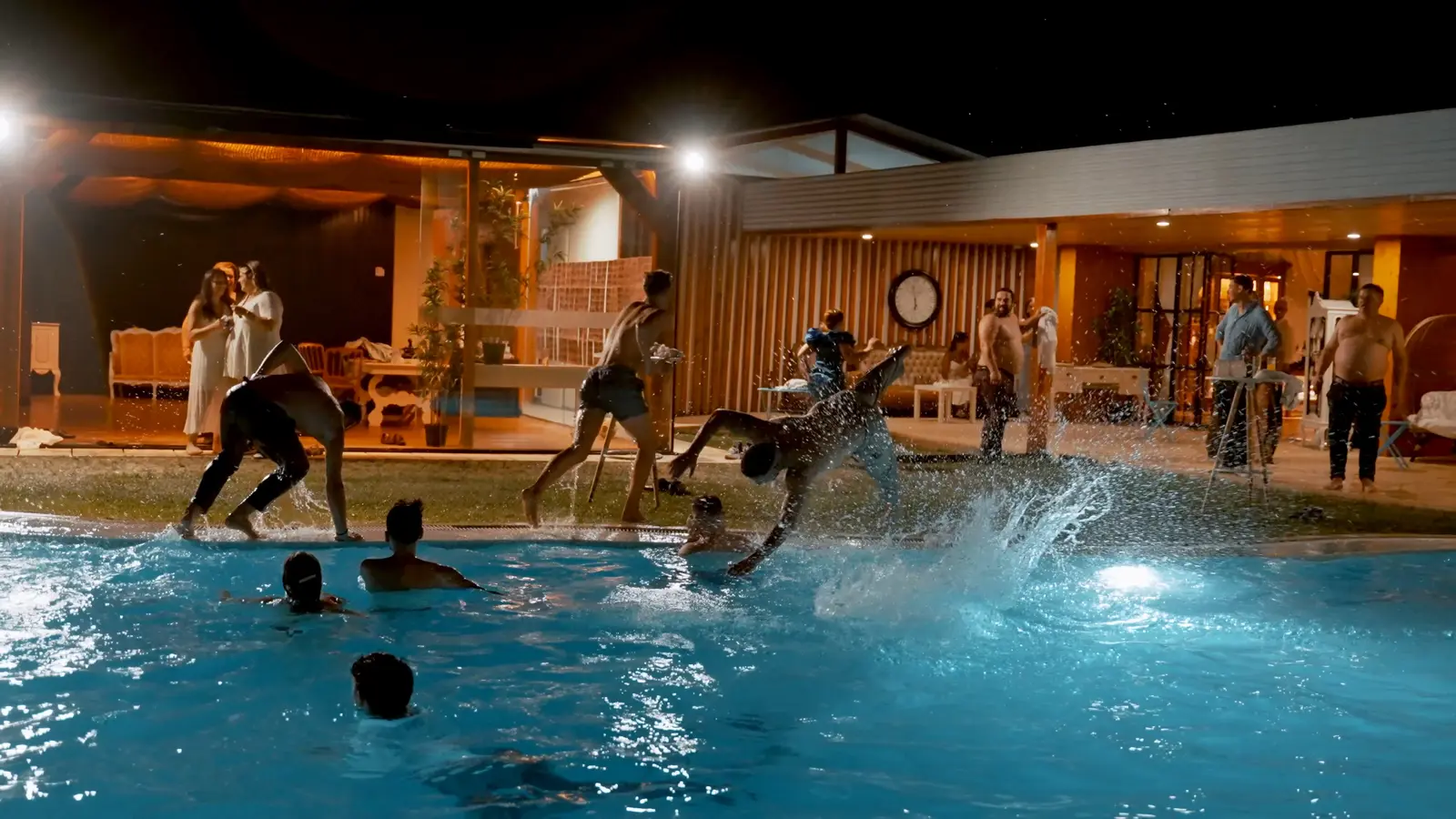
In post-production we edit, grade and mix the main film, then build each adaptation with its own rhythm. Delivery typically includes the 16:9 main film, square or 4:5 feed versions, 9:16 reels and stories, subtitles and shorter cut-downs. In live settings, such as the events and trade fairs in our portfolio, that early planning matters most, because action cannot be repeated.
If you are preparing an audiovisual campaign or need event video that serves several channels, our checklist for preparing a filming day is a practical next step.
References
- YouTube Help: Video and audio formatting specifications
- YouTube Help: Upload YouTube Shorts
- Meta Ads Guide: Video ads in Facebook Feed
- Meta Ads Guide: Video ads in Instagram Reels
- LinkedIn Marketing Solutions: Video ads specifications
- W3C Web Accessibility Initiative: Captions/Subtitles
Frequently asked questions
Can every horizontal video become vertical?
Technically yes, but a 9:16 crop keeps only about a third of the width of a 16:9 frame, so people, movement or text are often lost. Capturing alternatives for critical scenes gives a much stronger vertical version.
Does every social video need captions?
Meta lists captions as optional but recommended, and accessibility guidance requires them for prerecorded video with audio. Plan them inside the safe areas and deliver a clean version too when channels need flexibility.
Which aspect ratios should we ask for?
Most projects need a 16:9 main film, a 4:5 or 1:1 feed version and a 9:16 vertical version. Confirm against the platform's official specifications at delivery, because they change.
Does planning several formats make filming slower?
It adds some minutes for repeated actions or a second camera on critical scenes, but it saves far more time in the edit and avoids reshoots.
 Strategy
One video or a content campaign: how to decide
Learn when one hero video is enough and when a content campaign pays off, with a content matrix, real scenarios and mistakes to avoid before filming.
- content campaign
- corporate video
- social content
 Production
Checklist for preparing a filming day
A checklist for preparing a filming day: people, schedules, locations, sound, brand materials, permissions, drones and a plan B for a smoother shoot.
- filming checklist
- production day
- call sheet
 Strategy
How to prepare an audiovisual brief that prevents rework
A practical guide to writing an audiovisual brief: observable goals, audience, formats, approvals and constraints settled before filming to prevent rework.
- audiovisual brief
- video production
- planning