
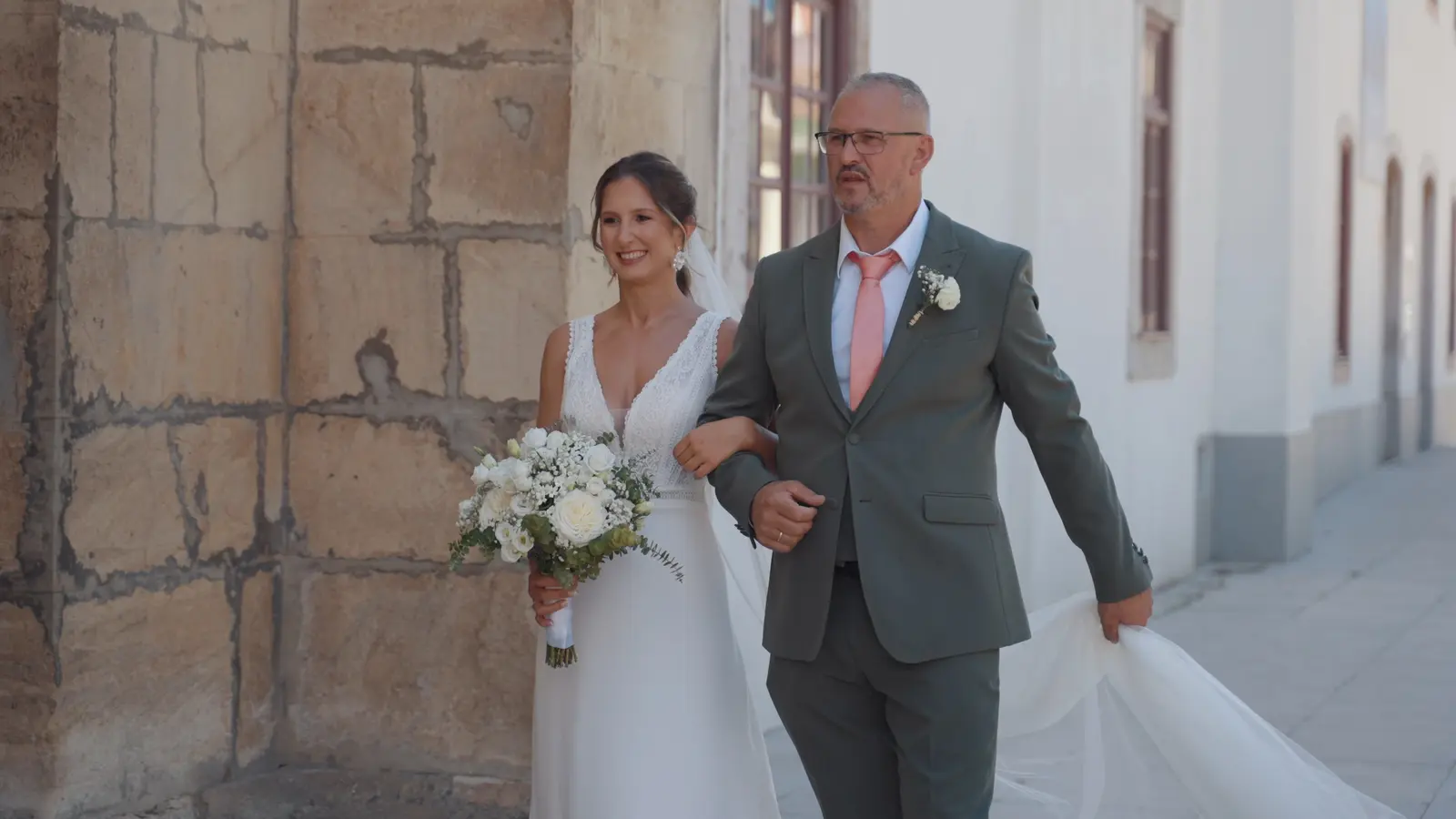
How to choose a wedding videographer
How to choose a wedding videographer: watch full films, ask about presence and sound, and confirm deliverables, timings and fair terms before you book.
- 01
Complete films reveal consistency, sound and storytelling far better than a teaser or reel.
- 02
The way a crew behaves around you on the day matters as much as its visual style.
- 03
Ask specifically how vows and speeches are recorded and how audio is backed up.
- 04
Deliverables, timelines, footage storage and cancellation terms should be written in plain language before you sign.
- 05
The first conversation is a reliable preview of how the team will work with you.
Quick answer
Choose a wedding videographer by watching at least two or three complete films, not just teasers, and checking how the team handles light, sound and moments that cannot be repeated. Then ask how they behave around you on the day, how they record vows and speeches, and exactly what you will receive and when. Sign only when the deliverables, timings and conditions are written in plain language and the conversation already feels comfortable.
Choosing who films a wedding is about more than comparing beautiful images. The team will be close to you during intimate moments, make decisions in seconds without the chance to repeat anything and become responsible for the way voices and gestures return years from now. This guide sets out what to look at, what to ask and what should be in writing before you book.
Watch complete films, not only teasers
A reel or teaser is designed for quick impact. It is edited from the best seconds of a day and set to music, so almost every team looks good in that format. A complete film reveals much more: consistency from start to finish, rhythm, how sound is handled and whether the team can sustain a story over a much longer running time than a short reel.
When you watch, look for weddings that resemble yours in some way: a similar venue, the same kind of light, an evening ceremony, a large or very small guest list. Notice how the team works when the day does not behave like a controlled shoot.
What to observe in a full film
- Low light. Do the evening scenes still feel natural, or do faces disappear into noise and orange glare?
- Ceremony coverage. Can you see both faces during the vows, and do you hear them clearly?
- Transitions. Does the film move logically from preparations to ceremony to party, or does it feel like a collection of unrelated clips?
- People, not just places. Are parents, grandparents and friends present in the story, or is the film mostly drone shots and table details?
- Consistency. Do three different weddings by the same team share the same level of care?
If you are still deciding what length and format you want, our guide to teaser, highlights or a full film explains what each one does well.
A portfolio should reveal more than visual style
Visual style is the easiest thing to judge and the least useful on its own. Colour grading and music can be copied; judgement under pressure cannot. A collection of attractive shots does not show how a team handles a celebrant who stands in front of the couple, a sudden shower during the cocktail hour or a speech delivered from the back of the room without a microphone.
| Aspect | What to observe | Useful question |
|---|---|---|
| Presence | Proximity without interference | How do you work during the ceremony and reception? |
| Sound | Clear voices and real atmosphere | Which moments receive dedicated audio capture? |
| Story | Rhythm connected to the couple | How do you decide the film structure? |
| Delivery | Transparent formats and timings | What is included in each collection? |
| Security | Process and redundancy | How is image and sound protected on the day? |
Use the table as a checklist during your first call. A good team will answer each question with specifics about their own process, not general reassurance.
Understand how the crew works around you
Ask how they position themselves during preparations, ceremony and celebration, how many people will attend and how they collaborate with the photographer. Two teams with very different working styles can end up in each other's shots for the whole day, so it helps when they talk before the wedding.
A discreet approach is not passive. It means reading the room, anticipating where the next moment will happen and being in place before it does, without turning the couple and their guests into actors. At SweetVision, the team observes rather than stages: we look for what is already happening and keep direction to the few moments where it genuinely helps, such as a short portrait session.
Find an approach that feels comfortable
Talk openly about how much direction you want. Some couples appreciate guidance during portraits; others want almost no intervention at all. Tell the team which relationships matter most, whether there are family sensitivities to be aware of and which moments you would be heartbroken to lose. The right team understands these priorities without turning the wedding into a sequence of staged instructions.
How many videographers do you need?
It depends on the scale of the day, the number of locations and whether things happen at the same time, for example both of you getting ready in different houses. Rather than choosing a number in advance, share your programme and ask the team to recommend a setup and explain why.
Talk about sound before you talk about drones
Vows, speeches and the atmosphere of the room give a film its depth. Images show what happened; voices bring back presence. Yet sound is often the part couples ask about least.
Ask how audio is captured, which moments receive microphones and what happens when a venue introduces technical limitations, such as a church where nothing can be clipped to the altar or a sound system that cannot provide a feed. Professional microphone manufacturers stress that placement matters: Shure's guide to lavalier microphones notes that proper placement helps achieve clear, natural audio and reduces problems caused by clothing and movement. A team that has thought about this will be able to tell you where the microphones go and how they protect the recording if one source fails.
We cover this in detail in why real sound matters in a wedding film.
Confirm delivery, timing and what happens to the footage
Read what is included in each collection: teaser, highlights, main film, full ceremony, speeches, resolution, delivery method, review process and expected schedule. At SweetVision the collections are called Essential, Sweet and Film, and they differ in what they include, from a teaser and highlights to the full film. The details of each are on the SweetVision page.
Then ask the practical questions that couples often forget:
- How long after the wedding will we receive the teaser and the main film?
- Is there a round of feedback on the edit, and what can be changed?
- How is the footage stored after the wedding, and for how long?
- How long do download links stay active, and should we keep our own copy?
- Can we order an extra edit later, such as a separate film of the speeches?
There is no single correct answer to these questions. What matters is that the answer is clear and that it appears in writing.
What should be clear before booking
Under EU consumer rules, a business must give you key information before you sign, including the main characteristics of the service, the total price with taxes and charges, the arrangements for payment and performance, and its identity and contact details. The European Union's Your Europe guide on contract information also states that contracts must be written in plain and understandable language.
For a wedding film, that translates into a short list:
- Date, locations and hours of coverage.
- Number of professionals and moments covered.
- Deliverables, approximate duration and delivery method.
- Coverage of ceremony, vows and speeches.
- Post-wedding communication and estimated timeline.
- Travel, postponement and cancellation conditions.
- Publication permission and privacy preferences.
- Extras available, without pressure to decide immediately.
Read the cancellation and postponement terms carefully
Weddings move. Venues change, families face illness, plans shift. Check what happens to any deposit if you postpone or cancel, and what happens if the team cannot attend. The Your Europe page on unfair contract terms gives, as an example of a potentially unfair term, a clause that lets a trader keep prepayments when the consumer cancels without offering equivalent compensation when the trader cancels. Balanced terms protect both sides, and a responsible team will be happy to explain theirs.
Agree on publication and privacy
Some couples are happy for their film to appear in a portfolio; others prefer it to stay private, or want certain moments, such as a family member's speech, kept out of anything public. Say what you prefer and make sure it is recorded in the agreement.
Evaluate the conversation itself
The first conversation is a preview of how the team will work with you for months. They should listen to your priorities, explain their choices and ask concrete questions about timings, travel, light, sound and the people who matter most.
Signs of a responsible team
- They explain limitations honestly instead of promising to control spontaneous moments.
- They ask about your programme before recommending a collection.
- They provide a readable agreement and answer questions about it without impatience.
- They distinguish inspiration from imitation: you can share references, but the final film should belong to your day.
Signs to slow down
- Pressure to sign quickly because "the date is almost gone", with no time to read the agreement.
- Vague answers about sound, delivery times or footage storage.
- A portfolio made only of short clips, with no complete film available on request.
- Little curiosity about you, your families or the way you want to experience the day.
Not sure how to describe the style you like?
Choose two or three films and point to specific moments: the use of voices, the length of shots, the role of music or the way the camera stays close to people. This gives the team something concrete to discuss without asking them to copy another couple's wedding.
How SweetVision approaches the first conversation
SweetVision is the wedding film brand of DropMedia, an audiovisual production team based in Sobral de Monte Agraço, in the Oeste region, working across Lisbon and the rest of Portugal. We follow the same sequence we use on every production: a conversation to understand the couple and the day, preparation of locations, timings and sound, discreet capture on the day, then editing, colour and sound mixing before delivery.
The conversation starts before choosing a collection. We ask about the people, the places and the moments that matter, and only then suggest the format that fits. You can see the options on the SweetVision services page or simply get in touch to tell us how you imagine the day.
The best choice is not the loudest team or the collection with the most minutes. It is the one whose language, presence and care for the footage match what you want to preserve.
References
- Shure: How to choose the best lavalier microphone
- European Union, Your Europe: Contract information
- European Union, Your Europe: Unfair contract terms
Frequently asked questions
How many videographers does a wedding need?
It depends on the scale of the day, the number of locations and whether moments happen at the same time. Share your programme and ask the team to recommend a setup and explain the reasoning.
Should we send references from other wedding films?
Yes, as long as you explain what moves you in each one, such as the use of voices or the pace of the edit. References guide the conversation; they should not become a brief to copy another couple's day.
How far in advance should we book a wedding videographer?
There is no fixed rule, but popular dates fill early, so start the conversation once the date and venue are confirmed. That also leaves time to read the agreement calmly.
What if our wedding is postponed?
Check the postponement and cancellation clause before signing, including what happens to any deposit. Terms should be balanced for both sides and written in plain language.
Can we keep our wedding film private?
Yes. Tell the team your preference about publication, including specific moments you want kept out of anything public, and make sure it is written into the agreement.
 SweetVision
Wedding film: teaser, highlights or Film Collection?
Teaser, highlights or Film Collection? Understand what each wedding film is for, how your choice shapes filming and how to keep the films safe.
- wedding film
- wedding teaser
- highlights
 SweetVision
Vows, speeches and real sound: why audio matters in a wedding film
Why real sound matters in a wedding film: how vows, speeches and atmosphere are recorded, backed up and mixed, and what couples can share to help.
- wedding audio
- vows
- speeches
 Strategy
Company film: how to turn a business into a clear story
A practical guide to a company film with one audience, one central idea, real evidence, useful interviews and versions planned for every channel you use.
- company film
- corporate video
- business storytelling